
Summary:
Licensed and Insured for Nassau County Outdoor Kitchen Work
This isn’t just paperwork – it’s your protection. Any contractor working on outdoor kitchens in Nassau County must carry proper licensing and comprehensive insurance coverage. But here’s where it gets tricky: general contractor licenses don’t automatically qualify someone for specialized outdoor kitchen work.
Your contractor should be able to show you current licensing specifically for masonry and outdoor construction work. We need liability insurance that covers gas line work, electrical connections, and structural masonry. Most importantly, we should be bonded, which protects you if we damage your property or fail to complete the work.
Don’t just take our word for it. Ask to see the actual certificates and verify the coverage amounts. A legitimate outdoor kitchen contractor will have this documentation readily available and won’t hesitate to show you proof.
Permit Knowledge and Local Code Compliance
Nassau County has specific requirements for outdoor cooking installations, particularly regarding gas line connections and electrical work. The permit process typically takes 2-4 weeks and involves submitting detailed plans showing utility connections and structural elements.
Here’s what separates professional outdoor kitchen contractors from general handymen: we understand local building codes inside and out. We know exactly which permits are required for your specific project, and we handle the application process for you.
A qualified contractor will explain the permit requirements upfront, include permit costs in our initial quote, and manage the inspection schedule. We’ll also ensure all work meets current Nassau County building codes, protecting your investment and ensuring safety.
If a contractor tells you permits aren’t necessary, or suggests you can “skip that step,” run. This is a massive red flag that indicates either ignorance of local requirements or willingness to cut dangerous corners. Proper permits aren’t just bureaucratic hurdles – they’re safety requirements that protect you, your family, and your neighbors.
Working with a contractor familiar with Nassau County requirements streamlines this process significantly. We know which inspectors to work with, understand common approval delays, and can navigate the system efficiently. This expertise often saves weeks on your project timeline.
Proper Gas Line Installation and Safety Protocols
Gas line work is where outdoor kitchen projects can become genuinely dangerous. This isn’t an area where you want contractors learning on the job or cutting corners to save time. Proper gas line installation requires specific certifications, specialized tools, and deep understanding of safety protocols.
Your contractor should be certified for gas line installation and able to show you our credentials. We need to understand the differences between natural gas and propane systems, including proper pressure regulation, leak detection, and emergency shutoff procedures.
But here’s what most homeowners don’t know: the installation is only half the safety equation. Proper testing is equally critical. A professional contractor will pressure test all gas connections, use electronic leak detection equipment, and document all safety checks. We’ll also explain how to operate the emergency shutoffs and what to do if you ever smell gas.
Ask your contractor about our gas line testing procedures. If we can’t give you specific details about pressure testing protocols and leak detection methods, keep looking. This is specialized work that requires specialized knowledge.
The consequences of improper gas line work extend far beyond your project. Faulty installations can lead to gas leaks, fires, explosions, and carbon monoxide poisoning. These aren’t theoretical risks – they’re documented hazards that have caused serious injuries and property damage in outdoor kitchens across Long Island.
Ventilation Systems That Actually Work
Ventilation isn’t optional – it’s a life safety requirement. Yet this is one of the most commonly overlooked aspects of outdoor kitchen construction. Many contractors either skip ventilation entirely or install systems that look good but don’t function properly.
Proper ventilation serves two critical purposes: preventing dangerous gas buildup and managing heat accumulation. Both natural gas and propane can collect in confined spaces, creating explosion risks if not properly vented. Even with proper gas line installation, leaks can occur, and adequate ventilation provides crucial protection.
The ventilation requirements differ dramatically between natural gas and propane systems. Natural gas is lighter than air and rises, so vents must be positioned at the top of your outdoor kitchen structure. Propane is heavier than air and sinks, requiring vents positioned as low as possible.
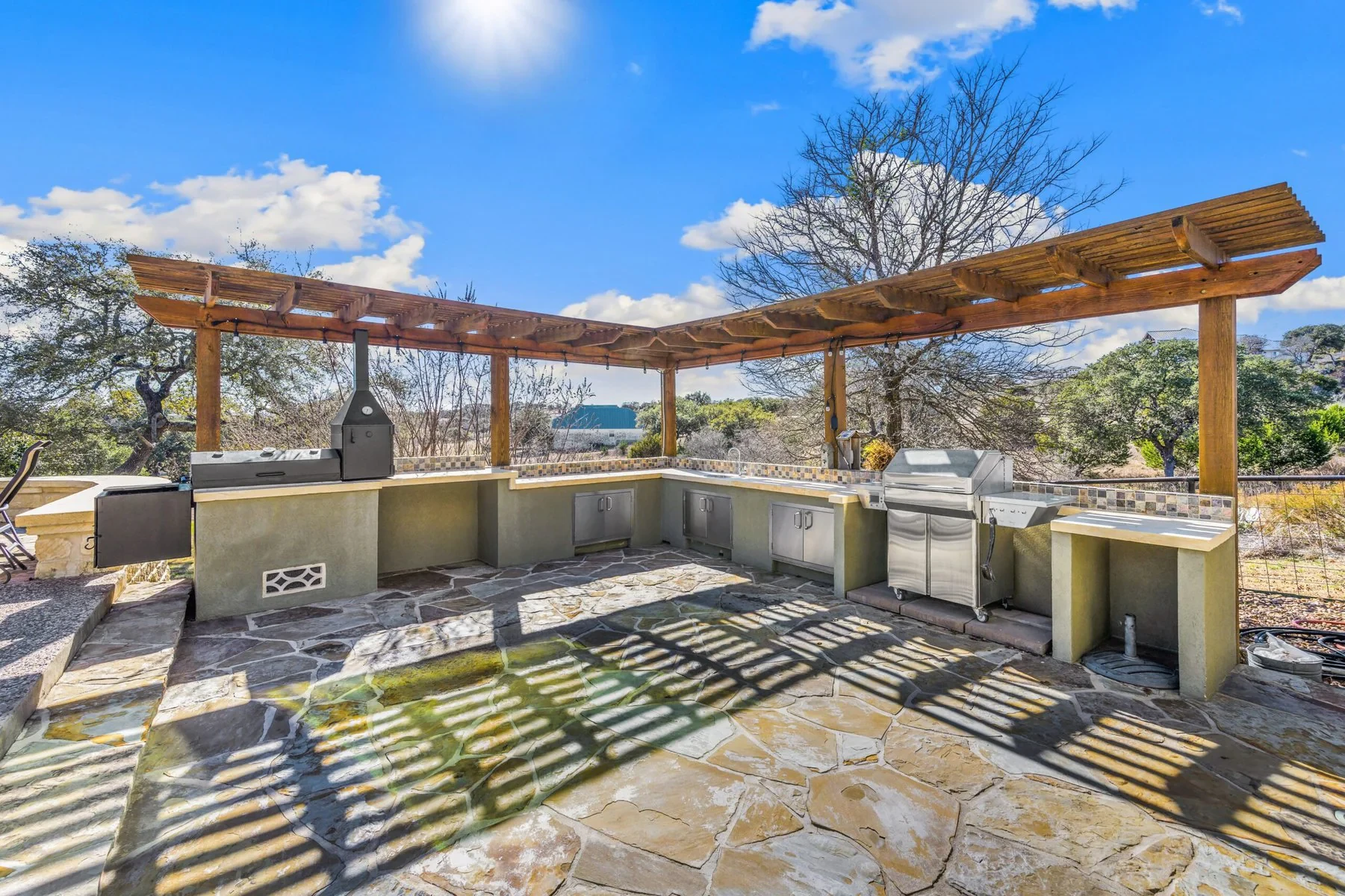
Vent Panel Placement and Sizing Requirements
Professional outdoor kitchen contractors follow specific guidelines for vent panel placement and sizing. The rule of thumb is one vent panel for every 4-6 feet of horizontal space in your outdoor kitchen structure. But placement is equally important as quantity.
For propane appliances, vents should be placed as close to the floor as possible, allowing heavier propane gas to escape before it can accumulate. For natural gas systems, vents need to be positioned at the top of the structure where rising gas naturally collects.
Many contractors make the mistake of placing vents 6 inches below the actual top of the island structure. This creates a dangerous accumulation zone where gas vapor can build up before being ventilated. Professional installers position vents at the very top and bottom of structures to ensure complete air circulation.
Cross-ventilation is another critical factor. Proper outdoor kitchen ventilation creates airflow patterns that prevent gas accumulation anywhere within the structure. This requires strategic placement of intake and exhaust vents to ensure continuous air movement.
Your contractor should be able to explain our ventilation design and show you calculations for vent sizing based on your specific outdoor kitchen dimensions. If we can’t provide this level of detail, or if our explanation seems vague, consider it a warning sign.
Heat Management and Fire Prevention
Gas ventilation gets most of the attention, but heat management is equally important for safety and equipment longevity. Excessive heat buildup can cause fires even when gas is being properly ventilated. This is especially critical if your outdoor kitchen will be positioned under any type of overhead structure.
Professional contractors design ventilation systems that address both gas and heat management. This often means installing additional ventilation at different levels of the structure, ensuring that hot air has clear escape paths that won’t create fire hazards.
If your outdoor kitchen will be installed under a gazebo, pavilion, or any overhead structure, hood ventilation becomes essential. Outdoor range hoods funnel hot air away from cooking surfaces while capturing grease that could otherwise create fire hazards.
The materials used in your outdoor kitchen construction also affect heat management. Professional contractors select materials that can withstand high temperatures without degrading or creating fire risks. This includes proper insulation around cooking appliances and heat-resistant finishes on all surfaces.
Your contractor should discuss heat management strategies during the design phase. We should be able to explain how hot air will be managed, what materials we’re using for heat resistance, and what safety features we’re incorporating to prevent fire hazards.
Quality Construction That Withstands Long Island Weather
Long Island’s climate presents unique challenges for outdoor kitchen construction. From hot, humid summers to harsh winters with freeze-thaw cycles, your outdoor kitchen needs to be built to withstand extreme weather conditions year-round.
Professional outdoor kitchen contractors understand these local climate challenges and design accordingly. We use proper foundation work that prevents settling and cracking, install drainage systems that manage spring thaws and heavy summer storms, and select materials that hold up to moisture and temperature extremes.
The construction methods matter as much as the materials. Proper foundation work, waterproofing, and structural reinforcement are what separate outdoor kitchens that last decades from those that start showing problems after the first winter. This expertise comes from years of experience specifically with outdoor kitchen construction in the Long Island climate.
Your contractor should be able to explain our weather-resistance strategies and show you examples of our work that has withstood multiple Long Island winters. We should discuss foundation design, drainage solutions, and material selection based on local weather patterns.
Building an outdoor kitchen that can handle Long Island weather isn’t just about using expensive materials. It’s about understanding how different materials interact with local climate conditions and designing systems that work together. Professional contractors know which stone veneers hold up to salt air, which countertop materials resist freeze-thaw damage, and which sealants provide long-term protection against moisture infiltration.